✍︎ Julia Marie Estrella
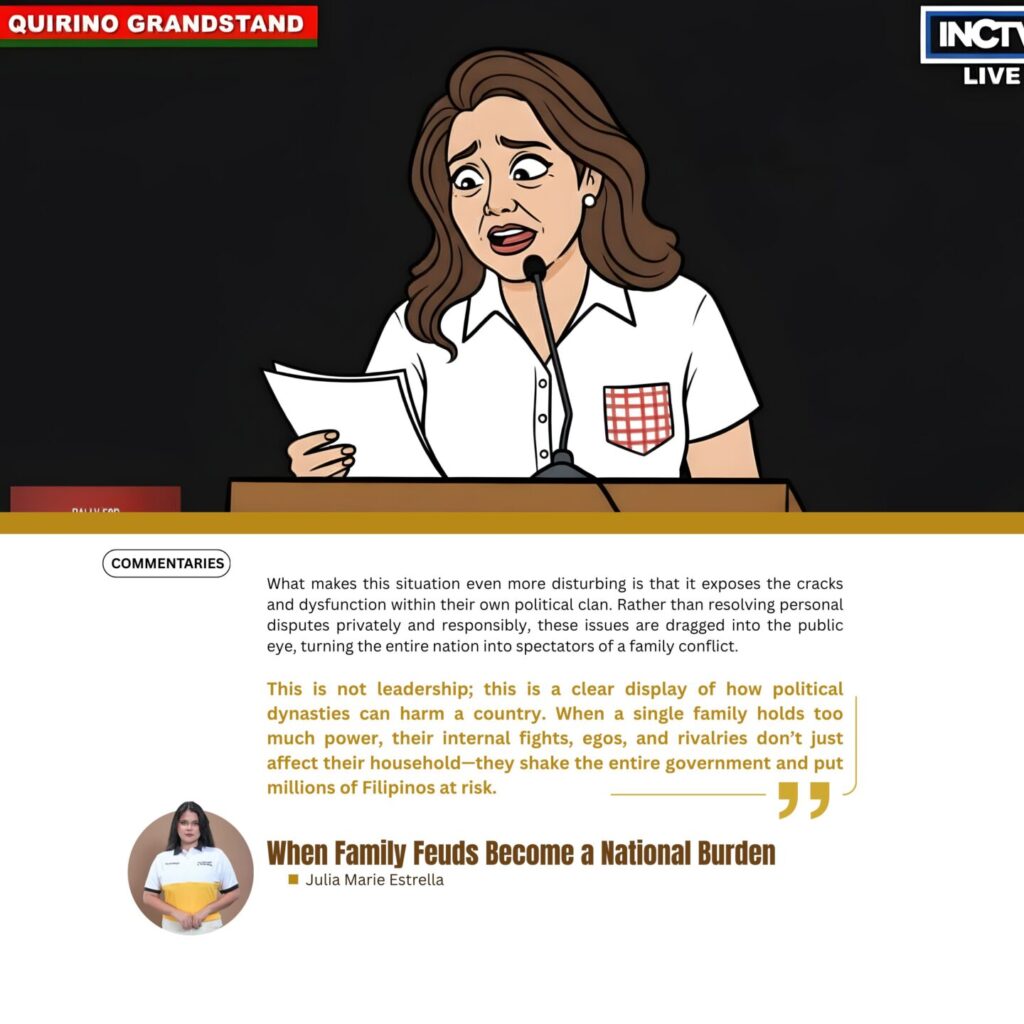
The latest controversy sparked by Sen. Imee Marcos’ statements accusing President Bongbong Marcos and even the First Lady of drug use has once again thrown the nation into unnecessary turmoil. These allegations—released without clear evidence—have created shock, confusion, and deeper distrust among Filipinos who are already exhausted by political drama. Instead of providing unity or direction, her words only feed chaos at a time when the country desperately needs stability.
What makes this situation even more disturbing is that it exposes the cracks and dysfunction within their own political clan. Rather than resolving personal disputes privately and responsibly, these issues are dragged into the public eye, turning the entire nation into spectators of a family conflict.
This is not leadership; this is a clear display of how political dynasties can harm a country. When a single family holds too much power, their internal fights, egos, and rivalries don’t just affect their household—they shake the entire government and put millions of Filipinos at risk.
Political dynasties thrive on control, but they fail the moment their own members use their positions to attack each other or leverage personal issues for political gain. The result? A country left confused, embarrassed, and struggling under the weight of drama that should never have reached the national stage in the first place.
Instead of protecting the people, these power struggles drag the public into a whirlwind of intrigue, accusations, and distractions from real problems—poverty, disaster recovery, corruption, inflation, and lack of basic services.
Filipinos deserve leaders who prioritize the country over their personal conflicts. They deserve governance that is stable, transparent, and mature—not one where family disputes become breaking news that weakens public trust even further. This is exactly why political dynasties are dangerous: when power is concentrated in one family, the nation becomes collateral damage in their internal battles.
Right now, what the Philippines needs is clarity, accountability, and unity—not reckless claims, not familial infighting, and definitely not the dysfunction that comes with dynastic politics. The people deserve better than to be dragged into the consequences of one family’s power struggle.