✍︎ Julia Marie Estrella
A graduation day is supposed to be a celebration—a milestone marked by smiles, applause, and the promise of a brighter future. Yet for one young girl, it became something else entirely: a protest, a plea, and a powerful indictment of a system that too often fails its most vulnerable.
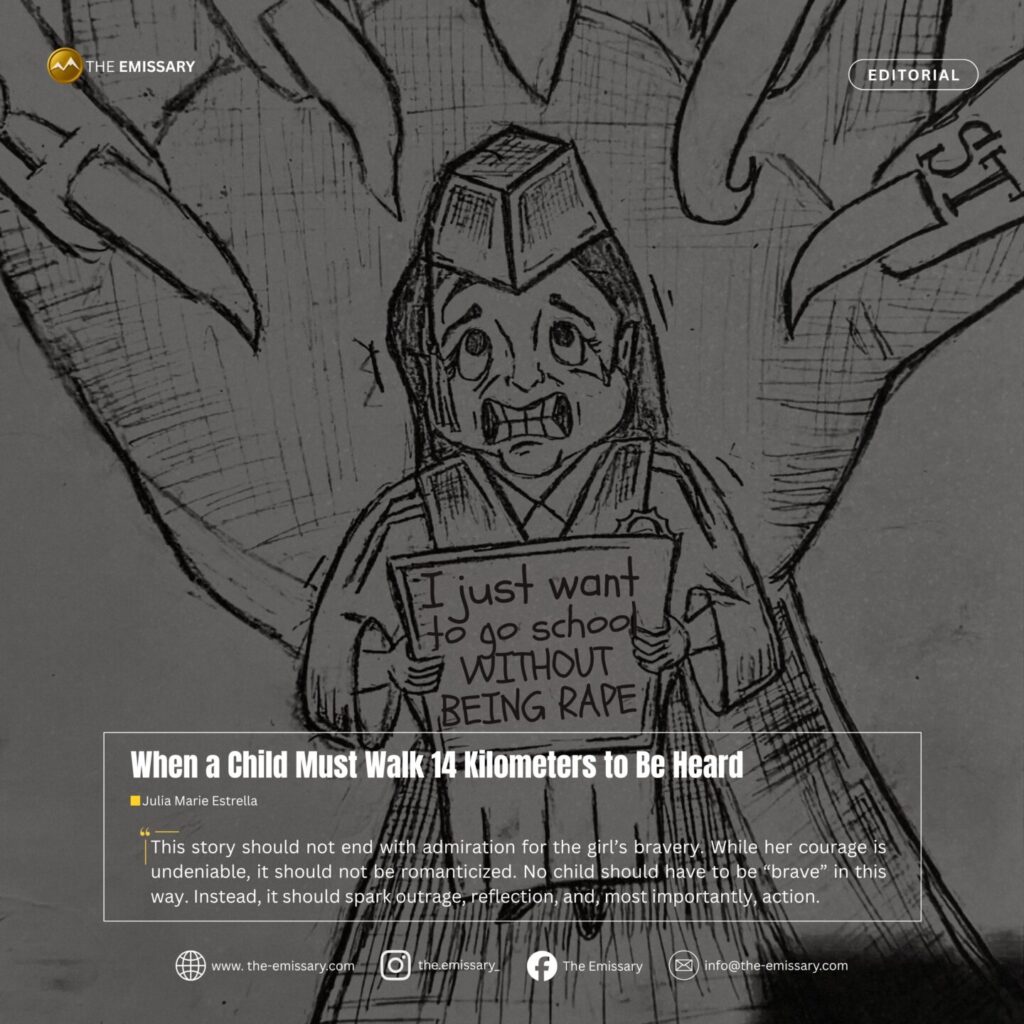
The image and message from the Redeemer Homeless Mission’s post are difficult to ignore. A child, still in her graduation attire, walked 14 kilometers not to celebrate, but to file a petition against a local official. Her story is not just heartbreaking—it is deeply unsettling. Because when a child feels compelled to take such action, it raises a troubling question: Where are the adults who are supposed to protect her?
This is not merely an isolated act of courage. It is a reflection of a larger, systemic issue. The girl’s narrative reveals layers of neglect, exploitation, and injustice—stories of abuse, lack of protection, and the normalization of suffering among the poor. These are not just statistics or distant headlines; they are lived realities for many children in marginalized communities.
What makes this even more alarming is how the burden of accountability has shifted. Instead of institutions stepping forward to ensure justice and safety, it is a child who must carry the weight—literally and figuratively. Walking kilometers under the heat of the sun, she becomes both victim and advocate, forced into a role no child should ever have to assume.
The mention of community efforts—feeding programs, education, and support from organizations like the Redeemer Homeless Mission—offers a glimmer of hope. It shows that compassion exists. But charity, while important, is not a substitute for justice. It cannot replace the responsibility of governance, law enforcement, and social protection systems.
This story should not end with admiration for the girl’s bravery. While her courage is undeniable, it should not be romanticized. No child should have to be “brave” in this way. Instead, it should spark outrage, reflection, and, most importantly, action.
We must ask ourselves:
Why do children in vulnerable communities remain unprotected?
Why are cases of abuse and exploitation allowed to persist?
And why does it take extraordinary acts from the powerless to demand basic rights?
Real change begins when stories like this are no longer exceptional—because the injustices they reveal have been addressed at their root. It requires stronger systems, stricter accountability, and a society that refuses to look away.
Until then, every step that child took is a reminder—not of hope, but of failure.
Illustration: Mariecon B. Segundino