✍︎ Ma. Niña Carmel Candar
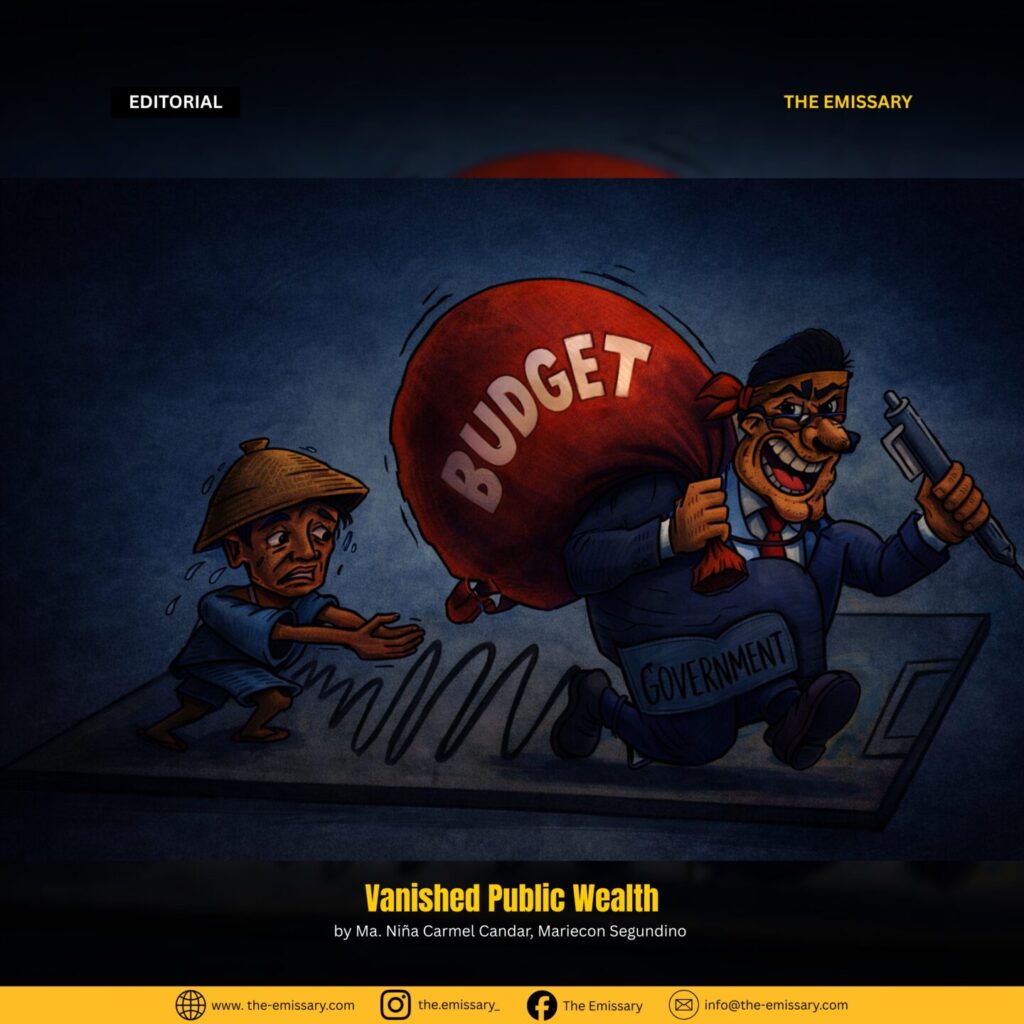
The government operates on a budget funded by the hard-earned money of its citizens, yet the trail of those billions often feels like a disappearing act. While grand figures are announced every year for essential services like roads and hospitals, the actual results seem to drain away long before they reach the public. When people see projects stall despite “record spending,” a massive gap in trust opens up, leaving taxpayers wondering how so much can be promised, yet so little is actually felt on the ground.
This disconnect isn’t just about complicated math; it’s a fundamental breakdown of accountability. When financial reports are buried under mountains of bureaucratic jargon, they create a fog that hides where the resources are actually flowing. A “missing budget” might not always mean the money was stolen, but the lack of clarity certainly makes it feel that way. Without a clear trail to follow, the public is left feeling cynical, watching wealth disappear into a structural void while everyday services continue to struggle.
Beyond the immediate loss of funds, there is long-term damage to the social contract. Citizens pay taxes with the expectation that their contributions will return to them in the form of safety, education, and health. When that wealth vanishes into thin air, that contract is effectively shredded. People stop seeing themselves as stakeholders in the country and start seeing themselves as victims of an inefficient system that values silence over solutions.
We often hear officials talk about “unforeseen expenses” or “administrative overhead,” but these phrases rarely explain why a bridge that was paid for remains half-finished for a decade. Without a direct line of sight from the treasury to the project site, the public is essentially flying blind. It is a frustrating reality when the people providing the capital are the last ones to know how it is being utilized.
True leadership requires a commitment to honesty and reports that the average person can actually understand. We need straightforward updates that treat the national budget as a shared responsibility rather than a state secret. If the government can track every single peso of a citizen’s income for tax purposes, it should also be able to show exactly where those same centavos go once they enter the public coffers.
By patching these fiscal leaks and clearly showing where every peso goes, the government can end the guessing game and finally ensure that public funds reach the people they were meant to serve. Transparency isn’t just about spreadsheets; it’s about proving that the system isn’t rigged to let wealth slip through the cracks. It’s about ensuring that the heavy lifting done by the workforce isn’t wasted on a broken container.
Imagine a system where a digital dashboard allows any citizen to see exactly how much was spent on their local school or clinic this month. This isn’t a futuristic dream; it’s a necessary step toward modernizing how we handle public resources. Clear, real-time reporting would eliminate the mystery and enforce a level of discipline that is currently missing from the halls of power.
Correcting this isn’t just about hiring more auditors; it requires a shift in mindset. Officials must realize they are not the owners of the money, but merely its custodians. When a custodian loses the keys or lets supplies rot, they are held responsible. The same logic should apply to the highest offices in the land when the national ledger fails to reflect benefits for the common good.
The public deserves more than just a list of big numbers during a televised speech; they deserve the truth behind the spending. Honesty in the budget means being brave enough to show failures as well as successes. Only when the books are fully open can we begin to identify where waste occurs and how to stop the drain on our collective future.
When the ledger is open and the leaks are mended, the scramble for answers can finally end, replaced by the stability of a budget that truly serves its purpose. We deserve to live in a society where the system is solid and strong, and every citizen can look to the horizon and see their investment at work. Only then can we move from a state of suspicion to one of genuine progress.
Illustration: Mariecon Segundino