✍︎ Angel Nicole Alima
In recent years, the Philippines has witnessed an alarming rise in HIV diagnoses, particularly in areas like Cebu—reporting increases as high as 300% among young people. “Globally, HIV infections are decreasing. Here, they continue to rise,” said Dr. Kathleen Joyce “KitKat” Del Carmen, a pediatrician and member of the HIV/AIDS Core Team at Kaambag Clinic, VSMMC. The majority of the newly diagnosed cases are among individuals aged 15 to 24 years old, placing Central Visayas among the country’s top five regions with the highest number of infections—recording over 11,347 cases as of June 2025.
According to the World Health Organization (WHO), the Philippines now has the fastest-growing number of HIV cases in the Asia-Pacific region, underscoring the urgent need for strengthened awareness, prevention, and testing efforts.
To understand the challenge, it is important to know how HIV spreads. The virus is transmitted through the body fluids of an infected person. The most common ways it is transmitted are through anal or vaginal sex, sharing needles for injecting drugs, and from a mother to her child during pregnancy, childbirth, or breastfeeding. It is not spread through kisses, hugs, or sharing food.
Following potential exposure and infection, an individual may experience symptoms that vary depending on the stage of the disease. In the first few weeks after infection, a person may experience fever, headache, rash, sore throat, swollen lymph nodes, weight loss, diarrhea, or cough. These early symptoms can potentially progress to more severe conditions if left untreated. The only way to know for sure if you have HIV is to get tested.
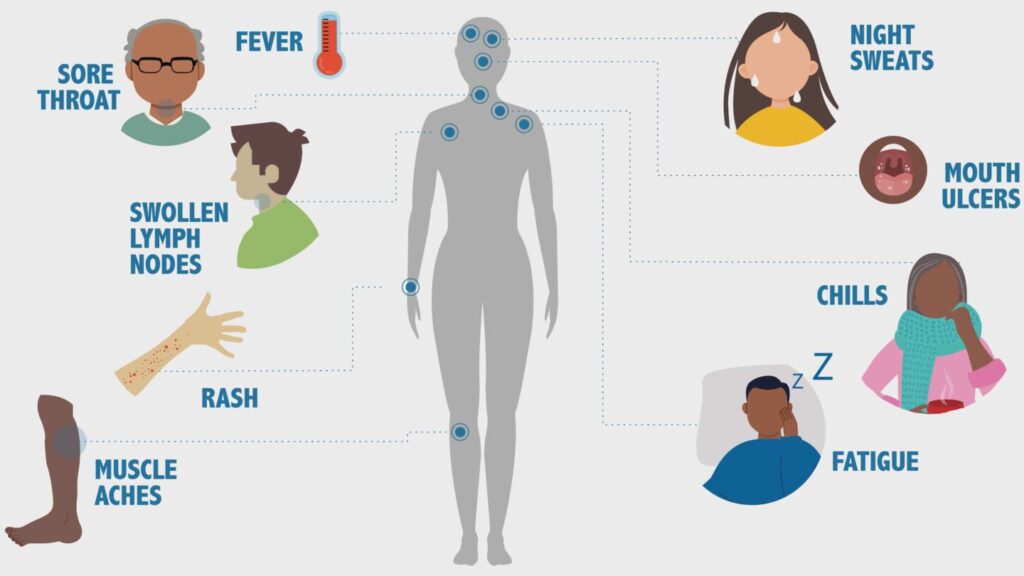
Photo: https://www.cdc.gov/hiv/about/index.html
Prevention remains one of the strongest tools in slowing the spread of the virus. Health experts from the National Institute of Health emphasize consistent condom use, regular testing, and proper education as the most effective barriers against transmission. The government also provides support and medication to help prevent HIV. With new medical advances, there are now treatments such as Pre-Exposure Prophylaxis (PrEP) and Post-Exposure Prophylaxis (PEP). These medicines can lower the chance of getting HIV if taken correctly and on time.
The increase in HIV infections is not only a healthcare problem—it’s a call for action. With advancing technology in the medical field, the Philippines is boosting programs, awareness, and prevention to reduce the spread of this disease. Yet, experts warn that no technology can replace the importance of education and openness in talking about it, especially among the youth.
References
SunStar Cebu. (2025). HIV’s 300% surge in youth hits Cebu. https://www.sunstar.com.ph/amp/story/cebu/hivs-300-surge-in-youth-hits-cebu
World Health Organization (2025) UNAIDS, WHO support DOH’s call for urgent action as the Philippines faces the fastest-growing HIV surge in the Asia-Pacific region https://www.who.int/philippines/news/detail/11-06-2025-unaids–who-support-doh-s-call-for-urgent-action-as-the-philippines-faces-the-fastest-growing-hiv-surge-in-the-asia-pacific-region
World Health Organization (2025) HIV and AIDS https://hivinfo.nih.gov/understanding-hiv/fact-sheets/basics-hiv-prevention
National Institute of Health (2025) The Basics of HIV Prevention https://hivinfo.nih.gov/understanding-hiv/fact-sheets/basics-hiv-prevention