✍︎ Julia Marie Estrella
Lolong was once known as the largest crocodile ever captured in the Philippines. His size alone was enough to command fear, fascination, and headlines. For a time, the nation watched closely—awed by his strength, wary of his power.
But beyond the spectacle of his capture lies a harder truth: Lolong was never the most dangerous crocodile we had to face.
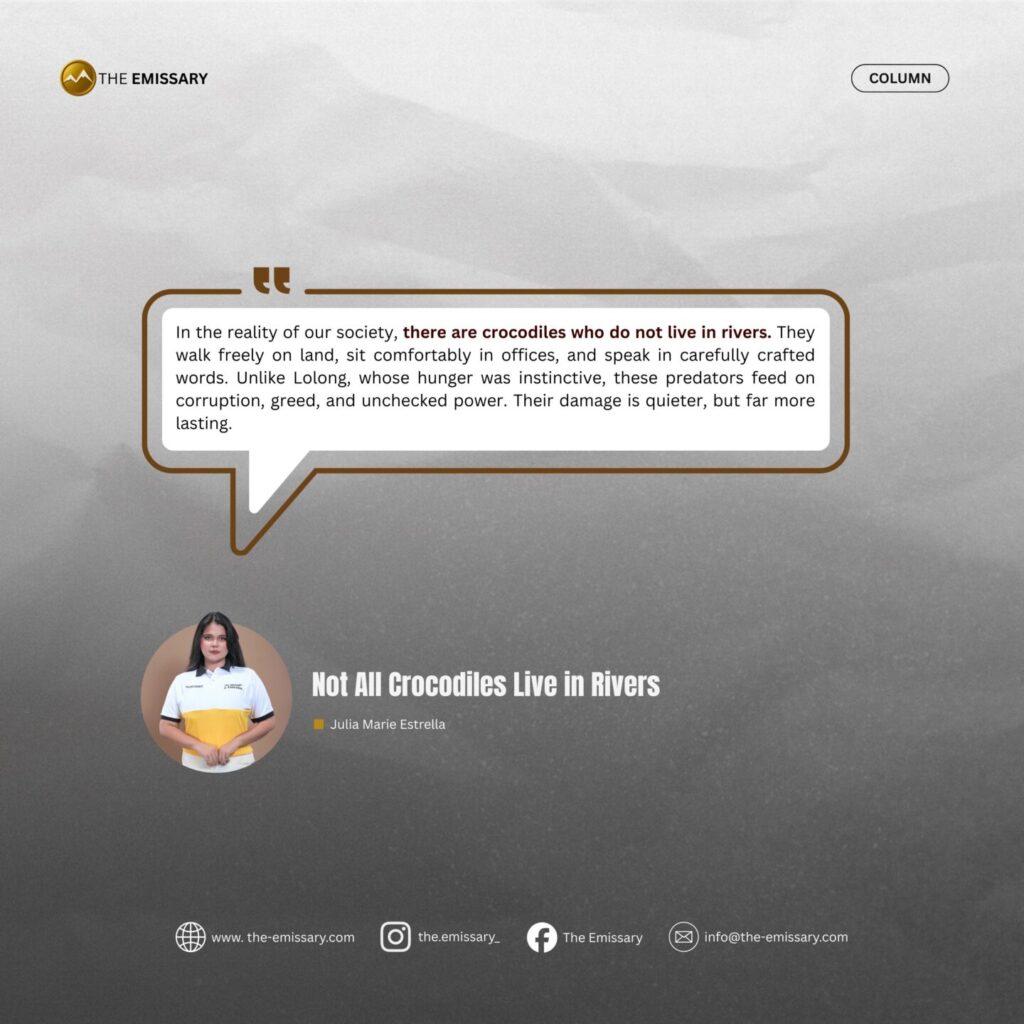
In the reality of our society, there are crocodiles who do not live in rivers. They walk freely on land, sit comfortably in offices, and speak in carefully crafted words. Unlike Lolong, whose hunger was instinctive, these predators feed on corruption, greed, and unchecked power. Their damage is quieter, but far more lasting.
We are taught to fear what is visible—the sharp teeth, the massive body, the immediate threat. Yet history reminds us that the most frightening forces are often those hidden in plain sight. They operate within systems meant to protect the people, slowly draining trust, dignity, and opportunity from those they govern.
Lolong is gone now. His story has settled into memory, his threat long ended. But the other crocodiles remain—untouched, unchallenged, and unaccountable.
Perhaps the question we should be asking is no longer where Lolong went, but why the real predators still roam freely. And more importantly, when we will finally find the courage to confront them.