✍︎ Gwapo
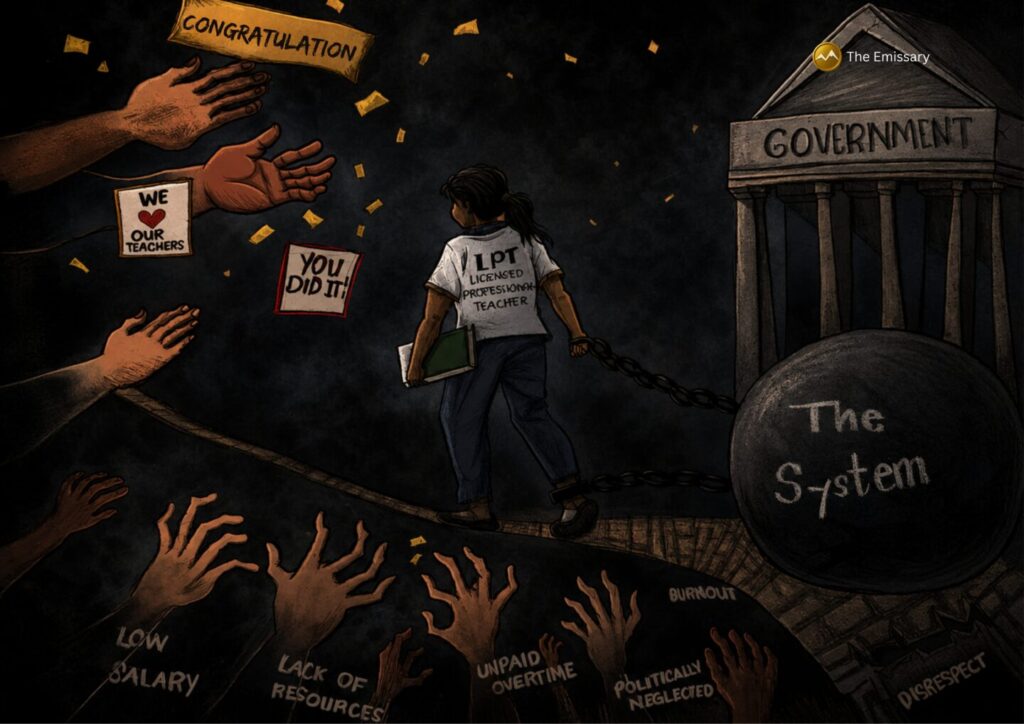
It’s becoming harder to celebrate the rise of new Licensed Professional Teachers in the Philippines without also thinking about the reality waiting for many of them after the oath-taking photos and congratulatory posts fade.
Yes, becoming an LPT is an achievement. It takes years of study, practice teaching, reviews, sacrifices, and financial struggle just to earn that title. But the painful part is this: for many teachers in this country, the profession they worked so hard for no longer guarantees dignity, stability, or growth.
A lot of teachers enter the field carrying passion, only to end up carrying exhaustion instead.
The system keeps demanding more from them—paperwork, reports, seminars, administrative tasks, unpaid overtime—while many classrooms remain overcrowded, underfunded, and lacking basic resources. Some teachers spend their own money for instructional materials. Others travel far distances daily just to teach. And despite all that, salaries still often fail to match the weight of the responsibility they carry.
What makes it worse is that education is constantly praised publicly but poorly prioritized structurally. Teachers are called “modern heroes,” yet many of them are overworked, politically neglected, and forced to survive rather than truly live. Passion alone cannot sustain a profession forever when the system itself keeps draining the people inside it.
And this is not an attack on teaching itself. Teaching is one of the most important professions in any functioning society. The frustration comes from knowing how valuable teachers are, while watching the government and institutions continuously fail to reflect that value in reality.
So when new LPTs pass the boards today, there’s still happiness for them—real happiness. But alongside that happiness is concern. Concern that many of them will eventually encounter burnout, stagnation, low compensation, and a system that asks for endless resilience while offering little reform in return.
The saddest part is that many brilliant educators no longer dream of building their future here. Some shift careers. Some leave the country. Some stay but slowly lose the fire they once had.
And unless serious systemic change happens—not just slogans, not just ceremonies, but actual investment, policy reform, accountability, and respect translated into action—the cycle will continue.
Because the problem was never the teachers.
It’s the system that keeps expecting people to save education while refusing to save the educators themselves.
Illustration: Chara Maine Cejudo