✍︎ Julia Marie Estrella
Women diagnosed with Polycystic Ovary Syndrome may soon become familiar with a new medical term: Polyendocrine Metabolic Ovarian Syndrome, or PMOS.
The renaming was introduced this year, as international experts recommended replacing the term PCOS to better reflect the condition’s hormonal and metabolic effects on the body.
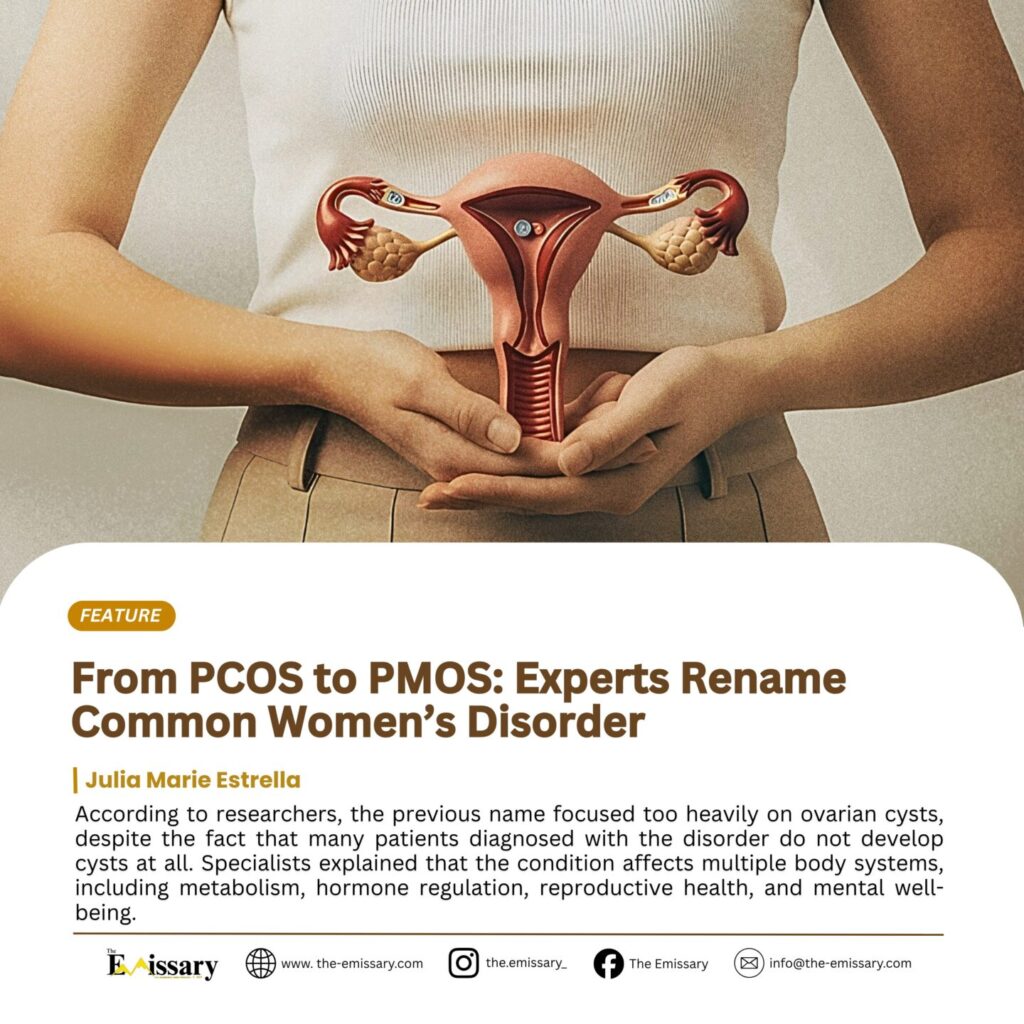
According to researchers, the previous name focused too heavily on ovarian cysts, despite the fact that many patients diagnosed with the disorder do not develop cysts at all. Specialists explained that the condition affects multiple body systems, including metabolism, hormone regulation, reproductive health, and mental well-being.
The American Society for Reproductive Medicine (ASRM) stated that the updated terminology recognizes the disorder as “a complex multisystem condition” rather than solely an ovarian disease.
Healthcare experts said the change could help improve public understanding and encourage more comprehensive treatment for patients.
Millions of women worldwide are estimated to live with the condition, though many cases remain undiagnosed due to varying symptoms. Common signs include irregular menstruation, infertility, weight gain, acne, fatigue, insulin resistance, and excessive hair growth.
Medical professionals also noted the condition’s connection to mental health concerns such as anxiety and depression, particularly among women who experience long-term physical and emotional effects from hormonal imbalance.
Following the announcement, discussions surrounding the renaming spread across social media platforms, where many women shared experiences of feeling misunderstood or dismissed during years of seeking diagnosis and treatment.
Experts believe the transition from PCOS to PMOS may encourage healthcare providers to look beyond reproductive symptoms and focus more on the condition’s broader metabolic and endocrine impact.
While the updated term is still expected to undergo gradual adoption in healthcare systems and medical literature, researchers emphasized that the change represents a step toward a more accurate understanding of women’s health conditions.
For many patients, the shift from PCOS to PMOS is not only a medical revision, but also a recognition of a disorder that affects far more than the ovaries alone.
Sources:
https://www.thelancet.com/journals/lancet/article/PIIS0140-6736(26)00717-8/fulltext