✍︎ Julia Marie Estrella
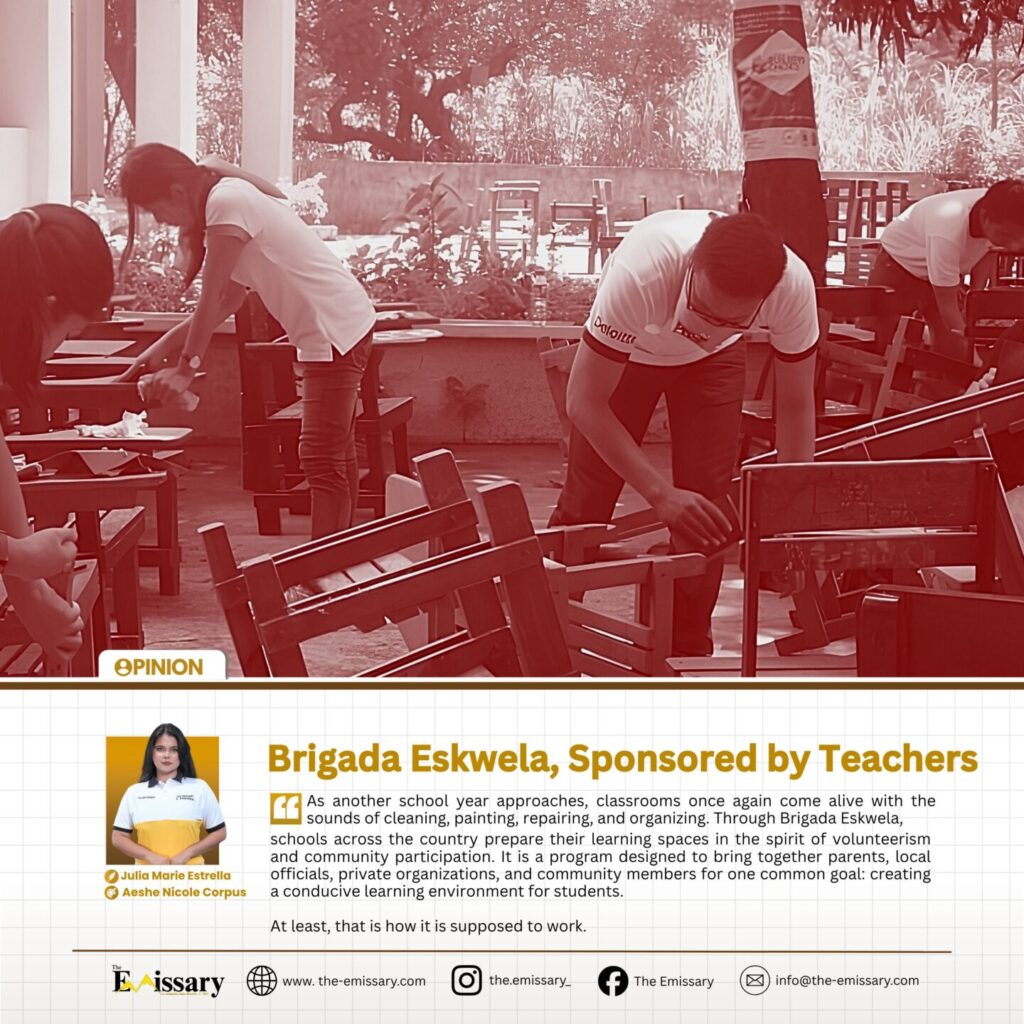
As another school year approaches, classrooms once again come alive with the sounds of cleaning, painting, repairing, and organizing. Through Brigada Eskwela, schools across the country prepare their learning spaces in the spirit of volunteerism and community participation. It is a program designed to bring together parents, local officials, private organizations, and community members for one common goal: creating a conducive learning environment for students.
At least, that is how it is supposed to work.
Behind the freshly painted walls, colorful bulletin boards, and neatly arranged classrooms lies an uncomfortable reality that many educators know all too well. While Brigada Eskwela promotes collective responsibility, teachers often end up carrying a significant portion of the burden—not only through their labor but also through their own wallets.
Every year, countless teachers spend their personal funds on paint, bond paper, cleaning supplies, decorations, visual aids, and other classroom materials. Some even purchase electric fans, curtains, and learning resources to make their classrooms more welcoming and functional. These expenses are rarely reimbursed, yet they have become so common that many now view them as a normal part of the profession.
The question is simple: Why?
Why do teachers continue to shoulder expenses that should already be covered by existing funds and allocated budgets? Why has spending personal money become synonymous with dedication and commitment?
Teachers are among the most hardworking professionals in society. Their responsibilities extend far beyond delivering lessons. They prepare instructional materials, assess student performance, attend seminars, complete reports, and participate in various school activities. Adding the financial responsibility of classroom maintenance only increases the burden on a profession that is already stretched thin.
The issue is not the willingness of teachers to help. Educators have consistently demonstrated their commitment to their students, often going above and beyond what is required. The problem arises when this sacrifice becomes an expectation rather than a choice.
When schools rely heavily on teachers’ personal funds to fill resource gaps, the line between volunteerism and obligation becomes blurred. Brigada Eskwela was never intended to become a program sustained primarily by the generosity of educators. It was designed to encourage shared participation among all stakeholders.
Moreover, celebrating teachers for spending their own money should not distract us from asking why such spending is necessary in the first place. Appreciation is important, but appreciation alone does not buy supplies, repair facilities, or improve working conditions. Genuine support comes from ensuring that resources are available and accessible where they are needed most.
The success of Brigada Eskwela should not be measured by how much teachers are willing to sacrifice. Rather, it should be measured by how effectively communities, institutions, and government agencies work together to support schools. After all, preparing classrooms for students is a collective responsibility, not a personal expense.
As schools once again open their doors for another academic year, perhaps it is time to rethink the narrative. Teachers should be recognized for their dedication, but they should not be expected to serve as sponsors of the very system they work tirelessly to sustain.
Because Brigada Eskwela should be powered by community partnership—not by the personal budgets of teachers.