✍︎ Caryl Jane R. Ordeñiza
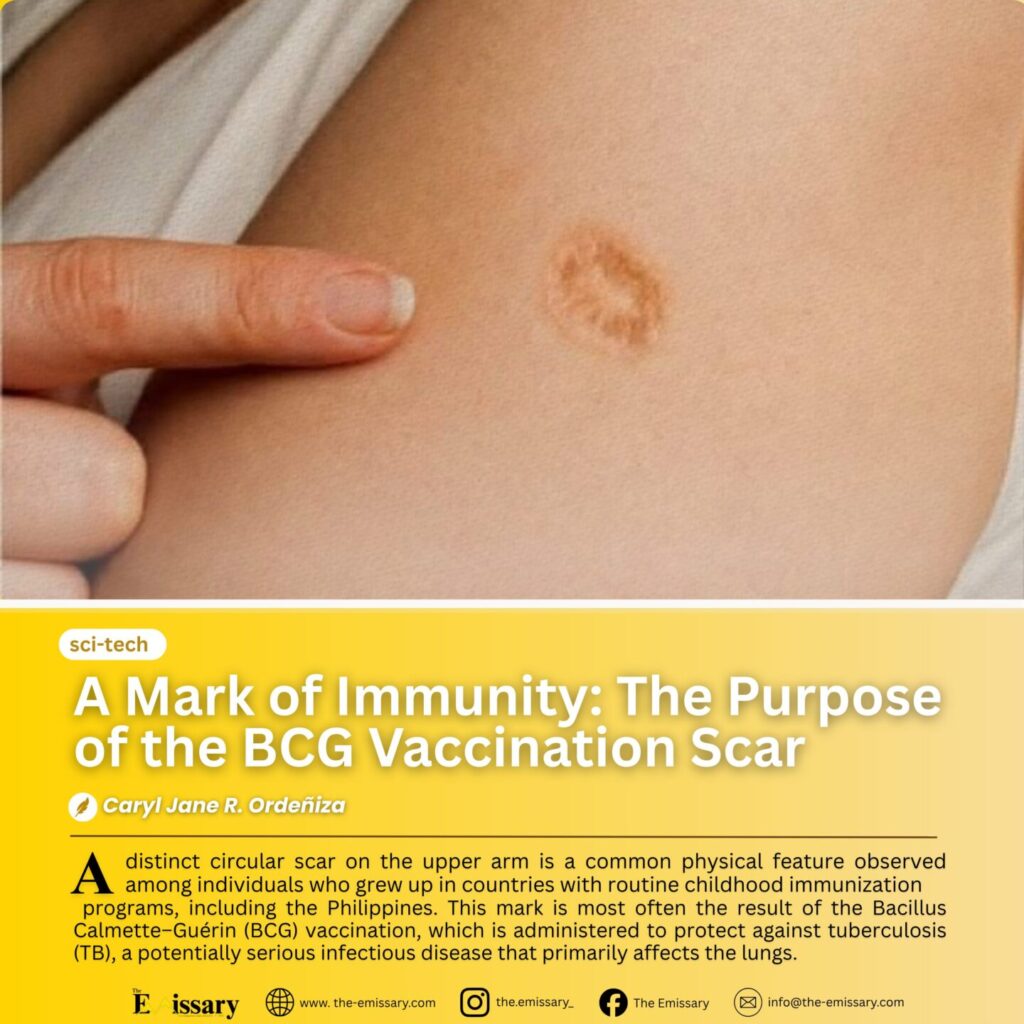
A distinct circular scar on the upper arm is a common physical feature observed among individuals who grew up in countries with routine childhood immunization programs, including the Philippines. This mark is most often the result of the Bacillus Calmette–Guérin (BCG) vaccination, which is administered to protect against tuberculosis (TB), a potentially serious infectious disease that primarily affects the lungs.
The BCG vaccine is typically given to infants shortly after birth as part of national immunization programs. Unlike many vaccines that are administered intramuscularly, the BCG vaccine is delivered intradermally, meaning it is injected just beneath the surface of the skin. This method of administration produces a localized immune response that becomes visible during the healing process.
Following vaccination, a small raised lesion appears at the injection site. Over time, this lesion may develop into a pustule or ulcer before eventually healing. The healing process often results in the formation of a permanent, round scar. This scarring is a normal and expected outcome, indicating that the body has mounted an immune response to the vaccine.
The widespread use of the BCG vaccine is largely due to the global burden of tuberculosis, particularly in regions where the disease remains prevalent. While the vaccine does not consistently prevent pulmonary tuberculosis in adults, it is highly effective in protecting young children from severe and life-threatening forms of the disease, such as tuberculous meningitis and miliary tuberculosis.
Does Receiving the BCG Vaccine Guarantee That an Individual Will Not Develop Tuberculosis?
It is important to clarify that receiving the BCG vaccine does not provide complete or lifelong immunity against all forms of tuberculosis. The vaccine’s primary effectiveness lies in preventing severe and disseminated forms of TB in children rather than completely eliminating the risk of infection, particularly pulmonary TB in adults.
Protection levels may vary depending on geographic location, exposure risk, and an individual’s immune response. Therefore, while the BCG vaccine significantly reduces the likelihood of serious complications, it does not guarantee absolute protection against the disease.
Does Everyone Who Receives the BCG Vaccine Develop a Visible Scar?
The answer is no.
It is important to note that not all individuals who receive the BCG vaccine develop a visible scar. Variations in skin type, immune response, and vaccination technique can influence whether a scar forms. The absence of a scar does not necessarily indicate a lack of immunity or vaccine failure.
From a public health perspective, the presence of this scar represents more than a simple physical mark. It serves as evidence of early-life immunization and reflects global efforts to control and reduce the spread of tuberculosis. In many communities, it is considered a silent yet enduring symbol of protection against a historically significant infectious disease.
In conclusion, the circular scar on the upper arm is a medically significant outcome of the BCG vaccination. It embodies both an individual immune response and a broader public health initiative aimed at safeguarding populations from tuberculosis, particularly during the most vulnerable stages of life.
References:
World Health Organization. (n.d.). BCG vaccine. Retrieved from https://www.who.int/teams/health-product-policy-and-standards/standards-and-specifications/norms-and-standards/vaccines-quality/bcg
Centers for Disease Control and Prevention. (2025, January 31). Bacille Calmette-Guérin (BCG) vaccine for tuberculosis. Retrieved from https://www.cdc.gov/tb/hcp/vaccines/index.html
Cleveland Clinic. (2026, January 29). Bacillus Calmette-Guérin (BCG) treatment. Retrieved from https://my.clevelandclinic.org/health/treatments/17908-bacillus-calmette-guerin-bcg-treatment