✍︎ Caryl Jane R. Ordeñiza
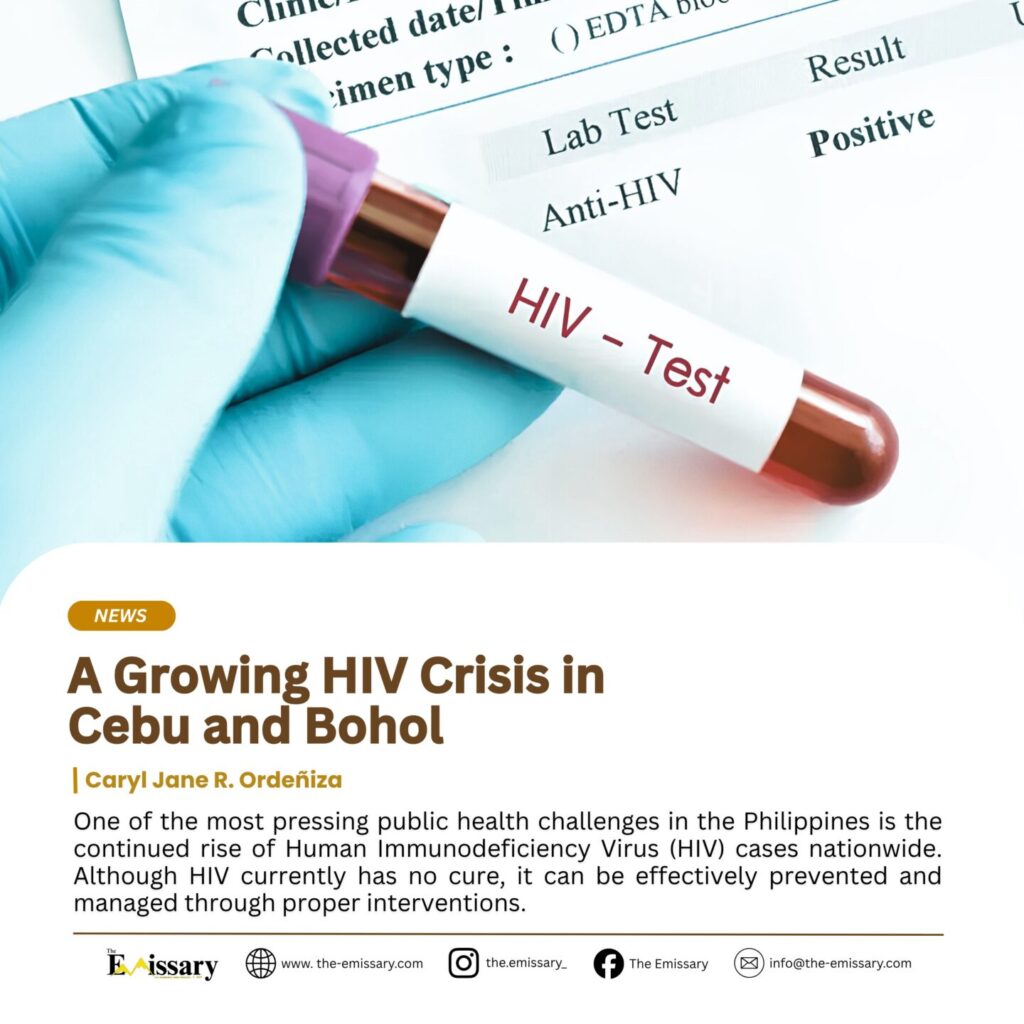
One of the most pressing public health challenges in the Philippines is the continued rise of Human Immunodeficiency Virus (HIV) cases nationwide. Although HIV currently has no cure, it can be effectively prevented and managed through proper interventions. Regions such as Cebu and Bohol are among those significantly affected by this ongoing health crisis.
From 1984 through March 2026, Central Visayas—specifically Cebu and Bohol—recorded a total of 12,137 cumulative HIV cases, accounting for approximately 7% of the national total.
The region also faces a distinct and highly concentrated sub-epidemic. Around 2,647 cases, representing approximately 99% of all needle-sharing-related HIV transmission cases nationwide, are found in this area. This is linked to injection-related transmission among specific high-risk groups and underlines the urgent need for highly targeted and adaptive prevention strategies, including both sexual health interventions and harm reduction approaches.
This local burden reflects a broader national challenge in achieving global HIV response targets. The Philippines has committed to the Joint United Nations Programme on HIV and AIDS (UNAIDS) “95-95-95” goals for 2030, which aim for 95% of people living with HIV to know their status, 95% of those diagnosed to receive consistent treatment, and 95% of those on treatment to achieve viral suppression, ultimately eliminating onward transmission.
However, current national outcomes highlight a substantial gap. Of an estimated 288,000 Filipinos living with HIV, only 55% have been diagnosed. Among those diagnosed, 69% are receiving treatment, and only 55% of those on treatment have achieved viral suppression. This disparity underscores the scale of the challenge and the urgent need to strengthen testing, treatment access, and long-term care systems nationwide.
Overall, the HIV situation in Central Visayas reflects both a serious regional concern and a broader national gap in prevention, testing, and treatment. The Philippines remains far from reaching the UNAIDS 95-95-95 targets. This underlines the need to improve awareness, increase testing, ensure access to treatment, and strengthen prevention programs. Addressing these issues is essential to reducing new infections and controlling the spread of HIV in the country.
Source:
Redirect notice. (n.d.). https://www.sunstar.com.ph/cebu/cebu-bohol-battle-high-hiv-burden