✍︎ Julia Marie Estrella
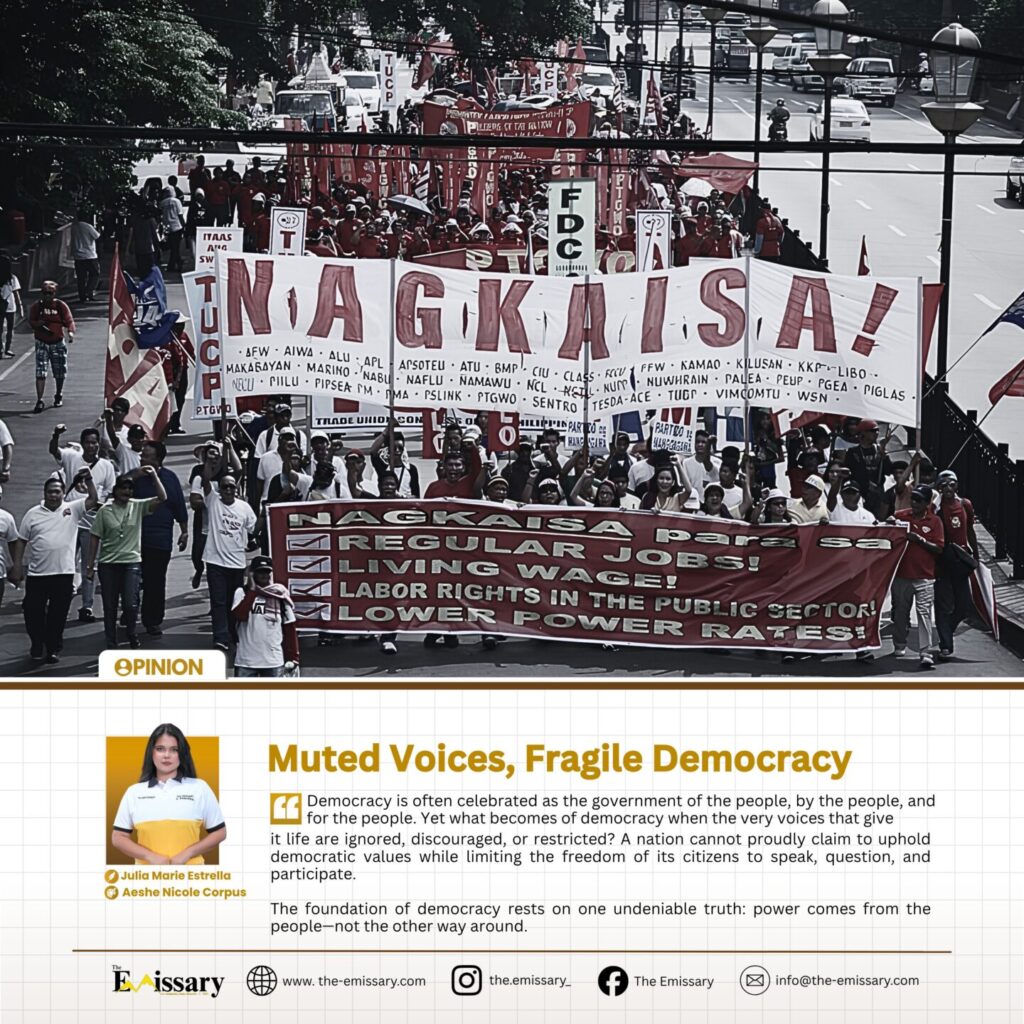
Democracy is often celebrated as the government of the people, by the people, and for the people. Yet what becomes of democracy when the very voices that give it life are ignored, discouraged, or restricted? A nation cannot proudly claim to uphold democratic values while limiting the freedom of its citizens to speak, question, and participate.
The foundation of democracy rests on one undeniable truth: power comes from the people—not the other way around. Public officials do not own authority; they are entrusted with it. Every vote cast, every opinion expressed, and every act of civic participation reminds us that sovereignty belongs to the citizens. When leaders forget this principle, democracy begins to shift from public service to the preservation of power.
Freedom of expression is not merely a constitutional guarantee—it is the heartbeat of a democratic society. Constructive criticism, peaceful dissent, and open dialogue are not threats to governance; they are essential safeguards against abuse and complacency. Silencing opposing views may create the appearance of stability, but it weakens public trust and undermines the accountability that democracy demands.
History has shown that societies flourish when citizens are encouraged to engage rather than remain silent. Progress is born from conversations, debates, and the willingness to confront uncomfortable truths. A government that listens to its people demonstrates confidence in its legitimacy, while one that fears criticism risks distancing itself from those it is meant to serve.
Democracy is not measured solely by elections or the existence of democratic institutions. Its true measure lies in whether every citizen can speak without fear, participate without intimidation, and be heard without discrimination. A ballot cast every few years means little if voices are muted during the years between elections.
The people’s voice is not an obstacle to democracy—it is democracy itself. When that voice is limited, the nation’s democratic foundation begins to erode. As long as power continues to originate from the people, leaders must remember that their greatest responsibility is not to silence the public but to listen to it. Only then can democracy remain more than a promise—it can become a living reality.