✍︎ Julia Marie Estrella
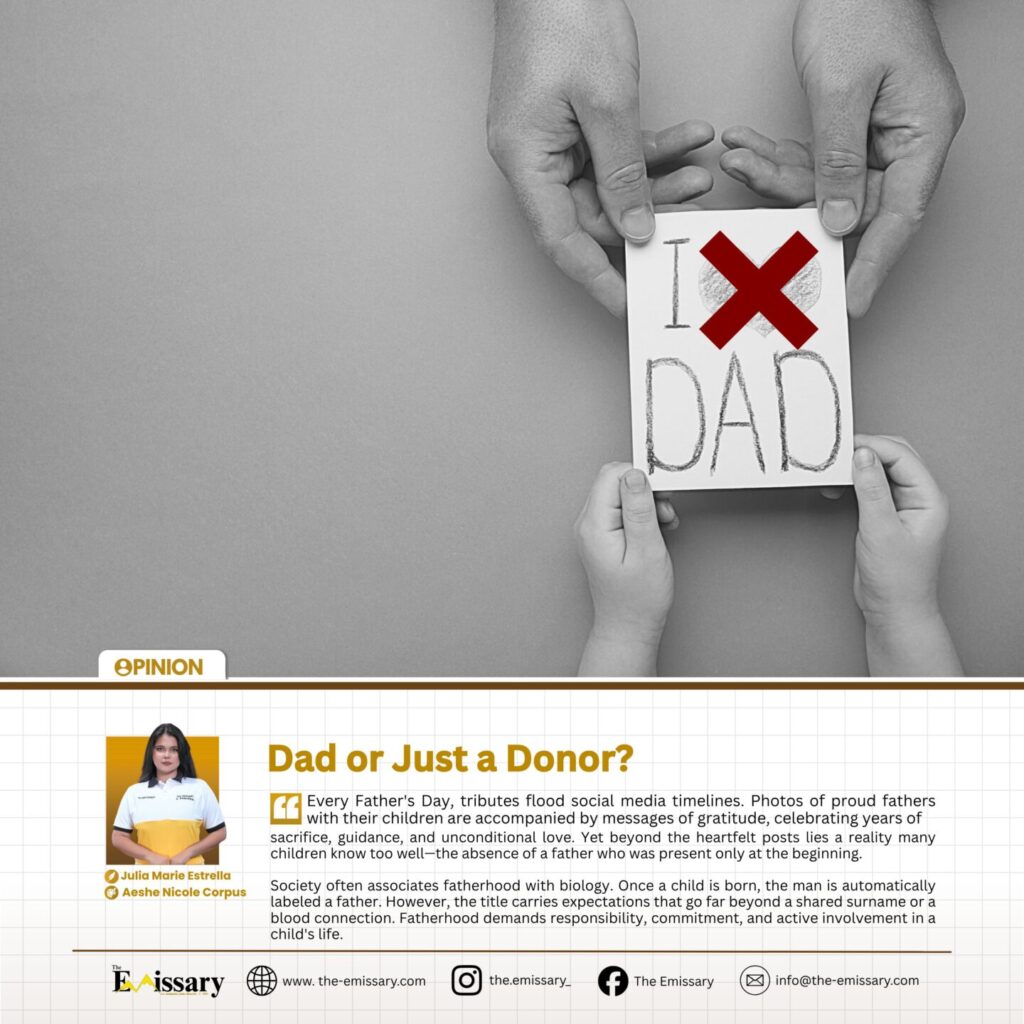
Every Father’s Day, tributes flood social media timelines. Photos of proud fathers with their children are accompanied by messages of gratitude, celebrating years of sacrifice, guidance, and unconditional love. Yet beyond the heartfelt posts lies a reality many children know too well—the absence of a father who was present only at the beginning.
Society often associates fatherhood with biology. Once a child is born, the man is automatically labeled a father. However, the title carries expectations that go far beyond a shared surname or a blood connection. Fatherhood demands responsibility, commitment, and active involvement in a child’s life.
Across communities, there are children raised by single mothers, grandparents, or relatives because the fathers who helped bring them into the world failed to fulfill their role. Some provide little to no financial support. Others are absent during milestones, celebrations, and even the struggles that shape a child’s growth. Despite this absence, many still expect to be recognized and respected as fathers.
The distinction between being a biological parent and being a dad is often overlooked. While biology may establish a connection, actions determine the strength of that bond. A father who consistently provides guidance, protection, and support earns a place in a child’s life. Without those efforts, the title becomes difficult to justify.
For students, the impact of paternal absence can be significant. Studies and personal experiences alike suggest that children often look to parents for emotional support and stability. When one parent chooses not to be involved, the effects can be felt inside classrooms, at home, and in personal development. Some students learn to adapt and persevere, while others continue to grapple with unanswered questions and unmet needs.
To be clear, fatherhood should not be measured solely by financial capability. Economic hardships, job loss, and unforeseen circumstances can affect anyone. What separates a responsible father from an absent one is not the size of his income but the sincerity of his effort. A father who remains present despite difficulties demonstrates a commitment that money alone cannot replace.
The issue arises when responsibility is abandoned altogether. A child does not need occasional appearances or empty promises. What children need is consistency. They need someone willing to share both the joys and burdens of parenthood. Without that commitment, fatherhood becomes a title in name only.
Respect is often said to be earned, not demanded. The same principle applies to fatherhood. Children remember who attended school programs, who offered encouragement after setbacks, and who stayed during difficult times. They remember the people who chose to be there.
In the end, becoming a father may happen in an instant. Becoming a dad takes a lifetime. And for those who refuse the responsibilities that come with the role, the question remains: are they truly fathers—or merely donors?