✍︎ Czarhytha Ais B. Omaguing
In the Philippines, even the simplest errands often demand more time than they should. Long queues have become a routine struggle for many Filipinos when processing documents or seeking medical care. A single transaction can take an entire day, and in urgent situations—especially in healthcare—time is a luxury people cannot afford. For some, the only way to get ahead is to wake up before dawn just to secure a place in line.
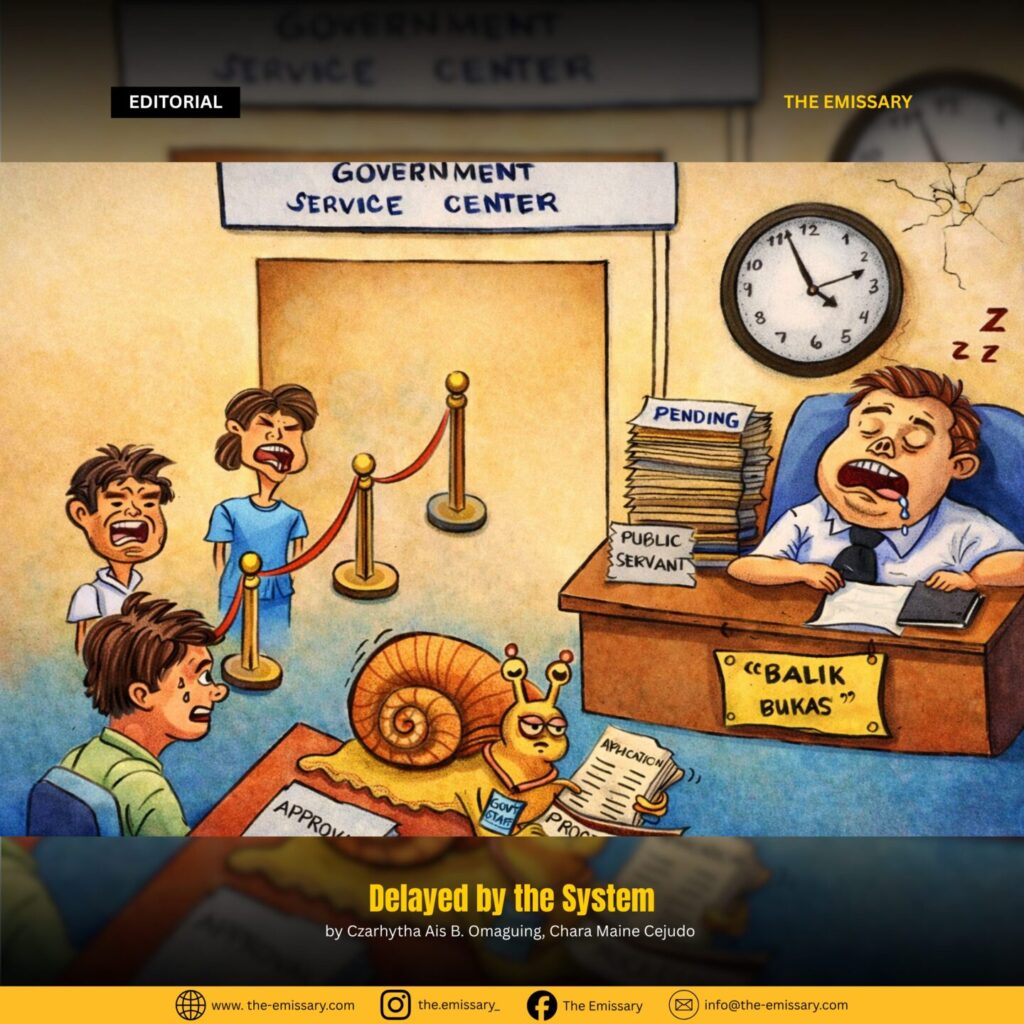
This everyday reality reveals a deeper problem in public service—one that goes beyond inconvenience and reflects inefficiency, a lack of urgency, and systems that fail to prioritize people’s time. Public service exists to serve the people, yet many Filipinos are left waiting, unheard, and underserved. What should be simple and accessible instead becomes exhausting and frustrating, turning basic rights into burdens.
This culture of waiting is not merely a matter of patience; it reflects systemic issues in how public services are delivered. In a “Siloy Asks” segment by CDN Digital, netizens expressed frustration over what they perceive as a lack of urgency in government offices. Many described being delayed by long breaks, encountering unapproachable staff, or navigating systems that seem unnecessarily complex. Simple requests often require multiple photocopies, notarized documents, and clearances from different agencies, forcing individuals to move from one office to another in a repetitive and exhausting process.
Nowhere is this more concerning than in the healthcare system. According to the Department of Health and the World Health Organization, the country faces persistent challenges such as shortages of healthcare workers, overcrowded public hospitals, and the migration of Filipino medical professionals abroad. These systemic issues contribute to long waiting times, leaving patients—particularly the elderly and vulnerable—sitting in crowded facilities, sometimes even on the floor, just to receive care.
The Philippines is not lacking in policy, but in consistent implementation. When systems are inefficient, the burden shifts to the people—costing them not only time, but also energy, dignity, and, in some cases, their well-being. What should be guaranteed as a basic service becomes a test of endurance.
Improving government services in the Philippines requires stricter implementation of existing laws, such as the Ease of Doing Business Act, to ensure faster processes and eliminate unnecessary requirements. Offices must adopt digital systems to reduce long queues and repetitive paperwork, while public servants should be held accountable for efficiency and professionalism. In healthcare, addressing staff shortages and improving working conditions can help reduce delays and overcrowding, ultimately leading to better patient care.
Public service should value people’s time. It should not make citizens wait for what is already their right. Efficiency, accountability, and compassion must be at the core of governance if services are to truly serve their purpose.
How long must the people wait before service truly becomes service?
Illustration: Chara Maine Cejudo