✍︎ Julia Marie Estrella
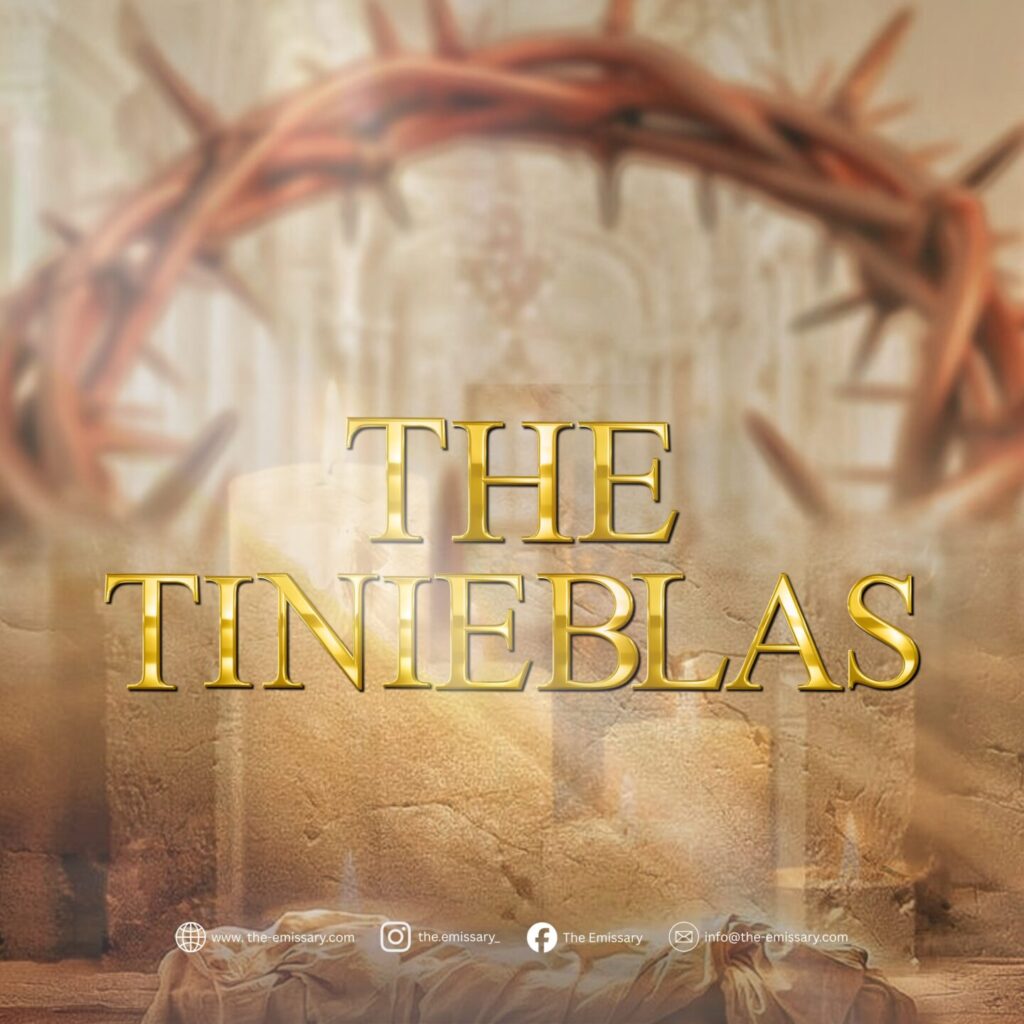
Paschal Triduum, CEBU CITY — Before sunrise breaks over the island, when the streets are still and the world feels paused, Cebu’s churches open their doors to a tradition that many have seen, but not all fully understand. In the dim interior, a triangular stand of fifteen candles glows softly while chants echo through the space. There is no spectacle, no elaborate narration—only silence, shadow, and ritual.
This is Tinieblas.
Often associated with solemnity and darkness, Tinieblas is more than a dramatic Holy Week observance. It is the local expression of Tenebrae, an ancient Catholic practice designed to help the faithful enter, not just remember, the final moments of Christ’s Passion. At its core, Tinieblas is about understanding—understanding suffering, abandonment, and the quiet persistence of hope.
The structure of the ritual itself tells the story. As prayers from Matins and Lauds are chanted, candles are extinguished one after another. This is not done randomly. Each flame that disappears represents the gradual abandonment of Jesus by His disciples. What may appear at first as a simple act of putting out candles becomes a powerful visual narrative of loss. The light does not vanish all at once—it fades slowly, just as loyalty and courage did in the face of fear.
As the ritual progresses, the church is consumed by darkness. This darkness is not only physical but symbolic. It reflects the confusion, grief, and spiritual blindness that marked the Crucifixion. For those present, Tinieblas becomes an invitation to sit in that darkness, to confront the discomfort of not seeing, not knowing, and not having immediate answers. It shifts the experience of faith from passive observation to active reflection.
At the center of Tinieblas is a single remaining flame—the Christ Candle. Unlike the others, it is not extinguished. Instead, it is hidden. This act often raises questions among first-time observers: why conceal the light instead of putting it out? The answer lies in the meaning of the ritual itself. The hidden candle represents Christ placed in the tomb—absent from sight, yet not extinguished. It teaches that even when hope seems lost, it is not destroyed, only hidden.
The sudden sound that follows—the Strepitus—can be startling. It breaks the silence with force, symbolizing the chaos of the moment of Christ’s death and the closing of the tomb. But more than its symbolic meaning, it serves to awaken the senses, reminding the faithful that the Passion was not quiet or distant—it was real, physical, and earth-shaking.
In Cebu, Tinieblas carries an added layer of meaning through the work of Rodolfo Villanueva, who helped translate and adapt the rite into the Cebuano language. Through his efforts and the continued guidance of the Cebu Commission on Worship, the ritual has become more accessible, allowing participants not only to witness it but to understand it in their own words and cultural context.
Ultimately, Tinieblas is not meant to be simply watched. It is meant to be understood. It teaches that faith is not always found in brightness or clarity. Sometimes, it is discovered in darkness—in moments of doubt, silence, and waiting. By walking through the gradual loss of light, the faithful come to grasp the depth of the Passion and the meaning of hope that does not easily fade.
As the ritual ends and the first hints of daylight begin to appear, those who leave the church do so with a clearer sense of what Tinieblas truly represents. It is not just a tradition of darkness, but a journey through it—a way of understanding that even when the light is hidden, it continues to burn.