✍︎ Julia Marie Estrella
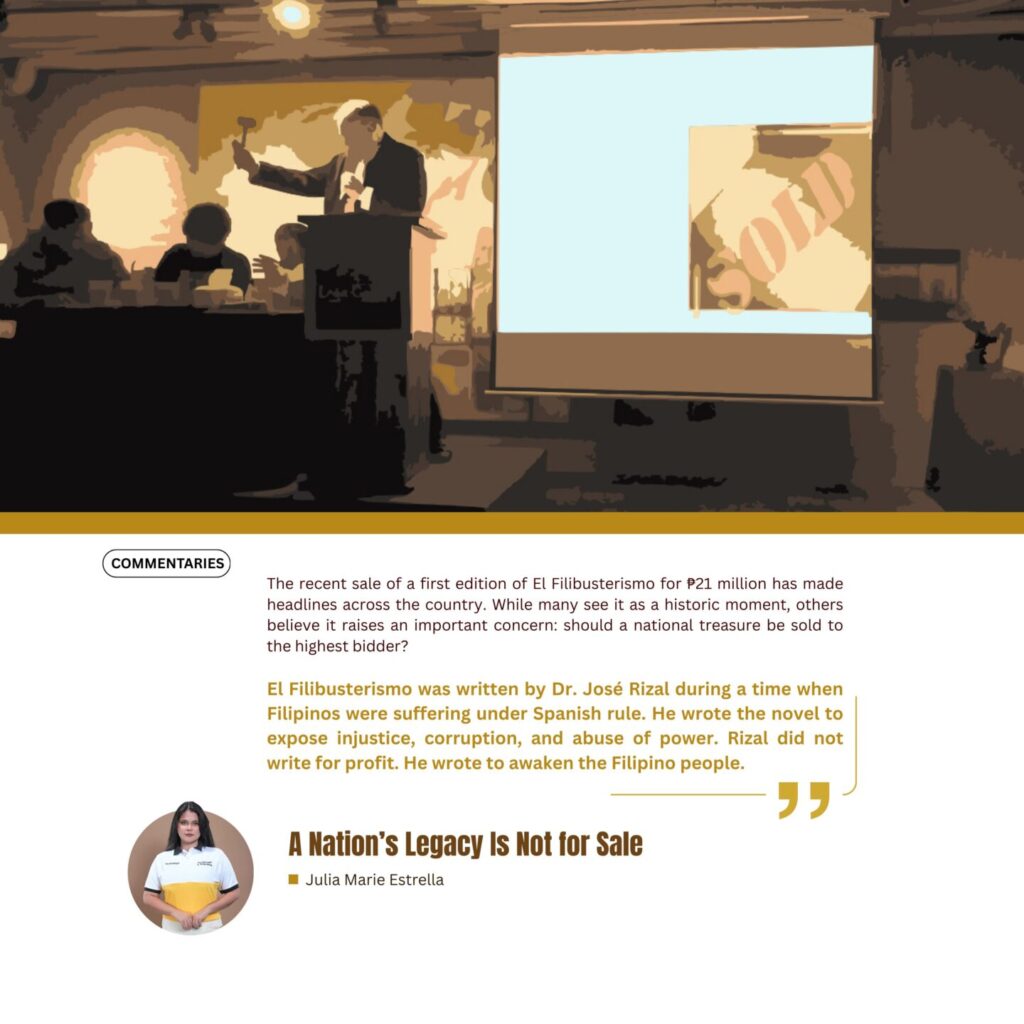
The recent sale of a first edition of El Filibusterismo for ₱21 million has made headlines across the country. While many see it as a historic moment, others believe it raises an important concern: should a national treasure be sold to the highest bidder?
El Filibusterismo was written by Dr. José Rizal during a time when Filipinos were suffering under Spanish rule. He wrote the novel to expose injustice, corruption, and abuse of power. Rizal did not write for profit. He wrote to awaken the Filipino people.
The value of the book cannot be measured by money alone. Rizal worked on El Fili while in exile. He faced danger because of his writings. In 1896, he was executed, partly because his ideas inspired the revolution. His sacrifice cannot be exchanged for ₱21 million.
Many believe that historical works like this should remain accessible to the public. As part of the country’s heritage, such items hold meaning for all Filipinos—not just for collectors. When national treasures are placed in private hands, there is concern that their cultural value may be overshadowed by their market price.
The sale may have set a record, but it also reminds the nation of a bigger issue: history is more than an object to be bought and sold. It carries the story of sacrifice, struggle, and identity. For many, that story is priceless.