✍︎ Angel Nicole R. Alima
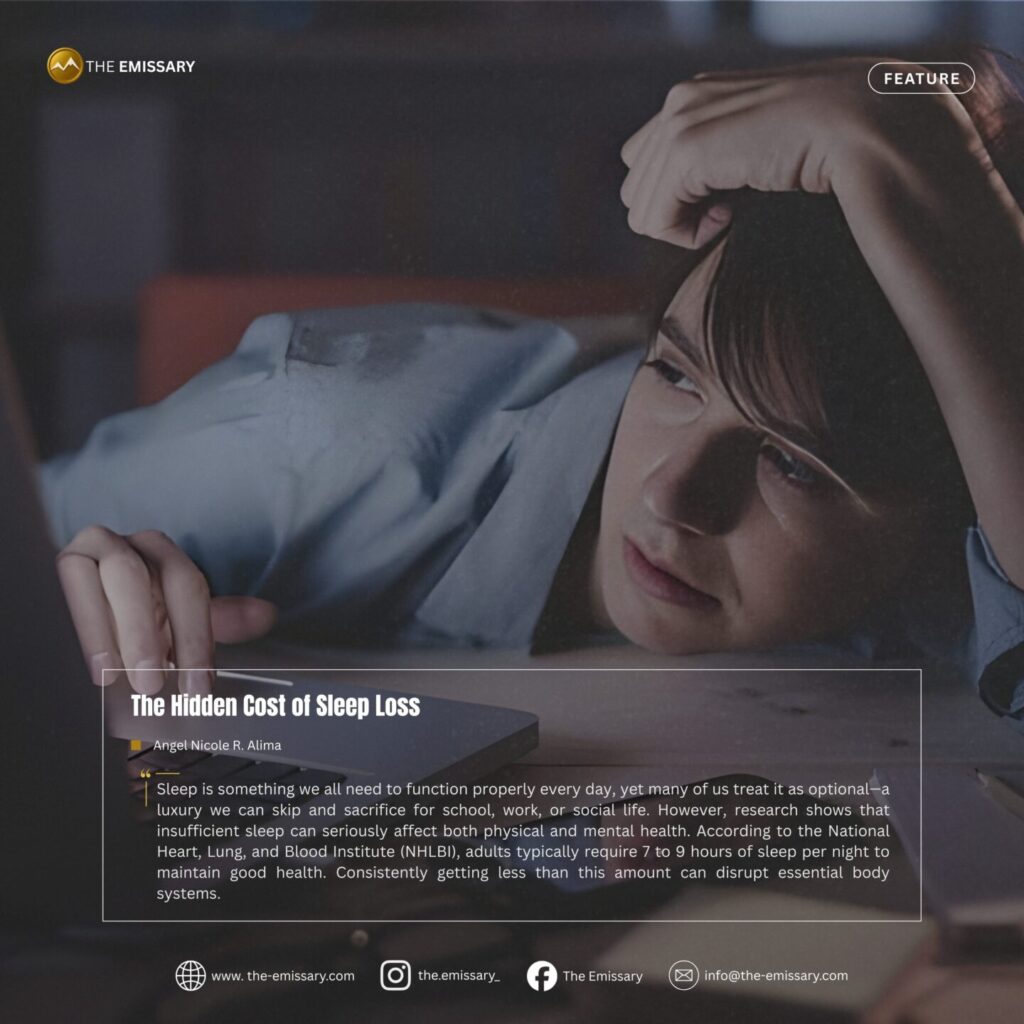
Sleep is something we all need to function properly every day, yet many of us treat it as optional—a luxury we can skip and sacrifice for school, work, or social life. However, research shows that insufficient sleep can seriously affect both physical and mental health. According to the National Heart, Lung, and Blood Institute (NHLBI), adults typically require 7 to 9 hours of sleep per night to maintain good health. Consistently getting less than this amount can disrupt essential body systems.
Not getting enough sleep does more than just make us feel tired; it prevents the body from repairing itself properly. Sleep is the time when hormones are regulated, the immune system is strengthened, and energy is restored. Disrupting this process can lead to serious health problems. Studies indicate that individuals who regularly sleep less than six hours per night face a significantly higher risk of various health concerns. Health organizations emphasize that adequate sleep is essential for overall well-being and immune system function.
Beyond physical health, sleep also plays a crucial role in brain function and emotional well-being. The brain relies on sleep to process information, form memories, and regulate emotions. The National Institute of Child Health and Human Development (NICHD) notes that inadequate sleep can impair attention, learning, and decision-making skills. As a result, individuals who do not get enough rest often struggle to concentrate. Sleep deprivation is also closely linked to mood disturbances. Research shows that people who experience chronic sleep loss are more likely to feel irritable, stressed, and anxious. The Centers for Disease Control and Prevention (CDC) reports that short sleep duration is associated with increased mental distress and mood disorders. Without sufficient rest, the brain becomes less capable of managing stress and emotional responses.
Ultimately, sleep is a biological necessity, not a personal choice. In a time when academic and daily demands continue to increase, prioritizing sleep is one of the simplest yet most effective ways to protect overall health. Quality sleep is not just about feeling refreshed the next morning—it is an investment in long-term physical health, mental resilience, and quality of life. Sleep deserves a place at the top of our priorities.
REFERENCES
National Heart, Lung, and Blood Institute (NHLBI).How Sleep Affects Your Health https://www.nhlbi.nih.gov/health/sleep-deprivation/health-effects
National Institute of Child Health and Human Development (NICHD).How does inadequate sleep affect health?https://www.nichd.nih.gov/health/topics/sleep/conditioninfo/inadequate-sleep
Raising Awareness of Sleep as a Healthy Behavior https://www.cdc.gov/pcd/issues/2013/13_0081.htm
The Impact of Sleep on Health and Well-being https://www.mentalhealth.org.uk/explore-mental-health/publications/sleep-matters-impact-sleep-health-and-wellbeing